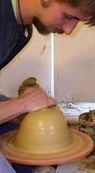
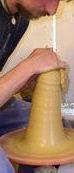
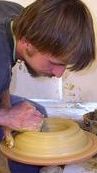
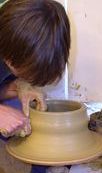
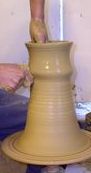
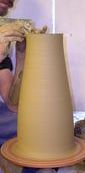
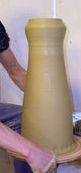
Throwing on the Wheel
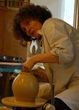
 From the first encounter with the
technique of throwing on the potter’s wheel to throwing complicated shapes
and large pots.
From the first encounter with the
technique of throwing on the potter’s wheel to throwing complicated shapes
and large pots.
The throwing branch for 2011 includes both the basic courses of the program, as
well as T4K – Ceramics and Flowers, which also includes RAKU
firing. This course will be held under the leadership of Petr Toms, as will
TD – Throwing Workshop. In this course, advanced potters
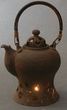
will study the creation of tea pots. This subject will also form the contents of
the vacation course T6J – Japanese Tea Pots. T2 – Second Throwing
on the Wheel will be prolonged in the summer to include the weekend,
devoted to firing in a gas kiln.
Basics of Throwing on the Wheel
- Name of the course:
- T1 – Basics of Throwing on the
Wheel
- Objective of the course:
- establishment of the basics of this technique, learning centering on the
wheel and shaping of a smaller item, glazing and firing of some of the pots
produced
- Suitable for:
- slightly advanced
- Entrance requirements:
- completion of course M1 or
experience at this level
- Length of the course:
- total of 55 hours (7 days), 14 hours of theory + 41 hours of
practice
- Contents of the course:
- begins with modelling practice, followed by the basics of throwing on the
wheel, decoration with engoba and simple glazing on about 10 items. The
theoretical part includes acquaintance with choice of materials, the basics of
firing and the main defects in glazes
- Program prepared / taught by:
- Ing. Jarmila Tyrnerová / instructors
of the Ceramics Studio
- Maximum number:
- 12 participants
- Certification:
- certified by the Ministry of Education, Youth and Sports as further
education of pedagogical workers.
Second Throwing on the Wheel
- Name of the course:
- T2 – Second Throwing on the Wheel
- Objective of the course:
- development of ability to use a potter’s wheel and learning the entire
procedure of throwing a straight and rounded mug (pulled handle) with a saucer,
selection and preparation of glazes and learning to glaze simple items
- Suitable for:
- slightly advanced
- Entrance requirements:
- completion of course T1 or
experience at this level
- Length of the course:
- total of 39 hours (5 days), 9 hours of theory + 30 hours of
practice
- Contents of the course:
- throwing mugs, saucers, candlesticks and dishes; some of the items produced
are completed using engoba, glazes and decoration of unfired glazes
- Program prepared / taught by:
- Ing. Jarmila Tyrnerová / instructors
of the Ceramics Studio
- Maximum number:
- 12 participants
- Certification:
- certified by the Ministry of Education, Youth and Sports as further
education of pedagogical workers.
Ceramics and Wicker
- Name of the course:
- T2P – Ceramics and Wicker
- Objective of the course:
- combination of two traditional crafts – weaving baskets and ceramics. The
ceramics part of the course concentrates on repetition of a single shape and
combination of wicker weaving with ceramic items.
- Suitable for:
- Medium advanced
- Entrance requirements:
- completion of course T2 or
experience at this level
- Length of the course:
- total of 55 hours (7 days), of which 14 hours of theory and 41 hours of
practice
- Contents of the course:
- acquaintance with the use of wicker, cane, bast, phloem, bondot and other
materials. You will take home products made with a combination of the two
crafts: a garden party cane tray with 4 cups, a paper basket with ceramic
features and a frame of boiled wicker, a dish in a basket and other items
- Program prepared / taught by:
- Mgr. Miloslava Benediktová / Mgr. Miloslava Benediktová
- Maximum number:
- 12 participants
- Certification:
- certified by the Ministry of Education, Youth and Sports as further
education of pedagogical workers.
Mugs with Sculptured Decoration
- Name of the course:
- T3 – Mugs with Sculptured
Decoration
- Objective of the course:
- learning shaping of products on a potter’s wheel using a rib, training
shape lines of mugs incorporating a pulled handle and adjustment of the
foot-ring. Comparison of the results of oxidation firing and reduction firing in
a gas-fired kiln.
- Suitable for:
- slightly to medium advanced
- Entrance requirements:
- completion of course T2 or
experience at this level
- Length of the course:
- total of 39 hours (5 days), 7 hours of theory + 32 hours of
practice
- Contents of the course:
- throwing exact shapes of mugs decorated by engraving, by scraping and
attaching decorations, glazing by spraying, dipping and pouring. The theoretical
part includes the history of sculptured decoration, development of kilns and
specific aspects of reduction firing
- Program prepared / taught by:
- Ing. Jarmila Tyrnerová / instructors
of the Ceramics Studio
- Maximum number:
- 12 participants
- Certification:
- certified by the Ministry of Education, Youth and Sports as further
education of pedagogical workers.
Throwing and Engoba
- Name of the course:
- T4 – Throwing and Engoba
- Objective of the course:
- learning throwing of medium-large pots, combined shapes, training various
kinds of locks and lids, closing pots while throwing; use of decoration by
engoba in the full range of possibilities
- Suitable for:
- medium advanced
- Entrance requirements:
- completion of course T3 or
experience at this level
- Length of the course:
- total of 55 hours (7 days), 9 hours of theory + 46 hours of
practice
- Contents of the course:
- throwing a cake form, lard barrel, sugar pot and table salt-and-pepper set.
Mixing engoba colours, decoration with a goose quill fitted to a cow’s horn,
Indian techniques. The theoretical part includes the history of ceramics.
- Program prepared / taught by:
- Ing. Jarmila Tyrnerová / instructors
of the Ceramics Studio
- Maximum number:
- 12 participants
- Certification:
- certified by the Ministry of Education, Youth and Sports as further
education of pedagogical workers.
Ceramics and Flowers
- Name of the course:
- T4K – Ceramics and Flowers
- Objective of the course:
- exact perception of shape and its transfer to thrown ceramic pots intended
for arranging flowers and natural materials
- Suitable for:
- advanced
- Entrance requirements:
- completion of course T4 or experience
at this level
- Length of the course:
- total of 55 hours (7 days), 10 hours of theory + 45 hours of
practice
- Contents of the course:
- throwing precise and elegant shapes of vases and dishes on a
potter’s wheel, including fitting together from parts, dealing with the
problem of impermeability of the material for water and use of a wide range of
decorative glazes
- Program prepared / taught by:
- Petr Toms / Petr
Toms
- Maximum number:
- 12 participants
- Certification:
- certified by the Ministry of Education, Youth and Sports as further
education of pedagogical workers.
Stoneware and Wiring
- Name of the course:
- T5 – Stoneware and Wiring
- Objective of the course:
- learning throwing of large pots by the technique of joining thrown pieces on
the wheel, putting together vessels from thrown parts, use of various stoneware
materials and glazes; acquaintance with the technique of wiring pots
- Suitable for:
- medium advanced
- Entrance requirements:
- completion of course T4 or experience
at this level
- Length of the course:
- total of 55 hours (7 days), 8 hours of theory + 47 hours of
practice
- Contents of the course:
- using the technique of joining thrown pieces in making goblets, bottles and
jugs; demonstration of modification of thrown shapes to form a salt jar;
preparation and use of earthy brown glazes on stoneware and
potter’s decoration of the surface. Wiring pots using a historical
technique.
- Program prepared / taught by:
- Ing. Jarmila Tyrnerová / Petr Toms
- Maximum number:
- 12 participants
- Certification:
- certified by the Ministry of Education, Youth and Sports as further
education of pedagogical workers.
Japanese Tea Pots
- Name of the course:
- T6J – Japanese Tea Pots
- Objective of the course:
- learning new procedures in putting together tea pots with emphasis on the
sieve, spout and handle; inspiration in shape and decoration based on Japanese
tea pots of the 19th century for one’s own creative work
- Suitable for:
- medium advanced and advanced
- Entrance requirements:
- completion of course T5 or experience
at this level
- Length of the course:
- total of 55 hours (7 days), 14 hours of theory + 41 hours of
practice
- Contents of the course:
- 4 thrown and 1 slab tea pot complemented by tea dishes created as
free-style copies of historical tea pots with typical Japanese decoration
- Program prepared / taught by:
- Ing. Jarmila Tyrnerová / instructors
of the Ceramics Studio
- Maximum number:
- 12 participants
- Certification:
- certified by the Ministry of Education, Youth and Sports as further
education of pedagogical workers.
Tea Pots Five Ways
- Name of the course:
- T6 – Tea Pots Five Ways
- Objective of the course:
- learning to make functionally reliable and aesthetically balanced tea pots
in various variations
- Suitable for:
- medium advanced and advanced
- Entrance requirements:
- completion of course T5 or experience
at this level
- Length of the course:
- total of 55 hours (7 days), 14 hours of theory + 41 hours of
practice
- Contents of the course:
- 4 thrown and 1 slab tea pot supplemented by a lemon press; the course
concentrates on various types of lids, handles and spouts
- Program prepared / taught by:
- Ing. Jarmila Tyrnerová / instructors
of the Ceramics Studio
- Maximum number:
- 12 participants
- Certification:
- certified by the Ministry of Education, Youth and Sports as further
education of pedagogical workers.
Other Tea Pots
- Name of the course:
- T7 – Other Tea Pots
- Objective of the course:
- learning difficult features and tea pots of complicated shapes and unusual
designs
- Suitable for:
- medium advanced and advanced
- Entrance requirements:
- completion of course T6 or experience
at this level
- Length of the course:
- total of 55 hours (7 days), 7 hours of theory + 48 hours of
practice
- Contents of the course:
- throwing a double-jacket tea pot with woven insulation surface and
incorporation of a heater into the overall shape, cut-out features and unusual
design of slab pots for two beverages
- Program prepared / taught by:
- Ing. Jarmila Tyrnerová / instructors
of the Ceramics Studio
- Maximum number:
- 12 participants
- Certification:
- certified by the Ministry of Education, Youth and Sports as further
education of pedagogical workers.
Throwing Workshop
- Name of the course:
- TD – Throwing Workshop
- Objective of the course:
- training complicated throwing procedures derived from history; fitting
together and turning individual parts on a potter’s wheel and rediscovering
historical glaze recipes
- Suitable for:
- advanced
- Entrance requirements:
- completion of course T6 or experience
at this level
- Length of the course:
- total of 39 hours (5 days), 7 hours of theory + 32 hours of
practice
- Contents of the course:
- discovering old working procedures and their use in throwing and putting
together complicated shapes inspired by historical vessels stored in
museums – jugs, storage jars, tiles, …
- Program prepared / taught by:
- Petr Toms / Petr
Toms
- Maximum number:
- 12 participants
- Certification:
- certified by the Ministry of Education, Youth and Sports as further
education of pedagogical workers.


 From the first encounter with the
technique of throwing on the potter’s wheel to throwing complicated shapes
and large pots.
From the first encounter with the
technique of throwing on the potter’s wheel to throwing complicated shapes
and large pots.